Actress, screenwriter, producer and now novelist, Prisca Marceleney wears many hats and works on numerous projects, all guided by one core mission: telling stories that reflect Ivorian and African realities. In this interview with African Shapers, she looks back on her journey, her challenges, her ambitions, and her latest flagship series, Dr Wlika.
African Shapers: Could you introduce yourself and tell us about your journey?
I am Prisca Marceleney, an Ivorian actress. I was born in Abidjan, where I grew up and completed all my schooling: primary school, middle school, high school, and university. I first studied modern literature in Abidjan before eventually turning fully toward the arts.
After graduating from high school, a casting call was launched at the Palais de la Culture, which at the time was directed by Sidiki Bakaba. He was looking for young talents interested in cinema. I took part and was selected. That’s how I joined my mentor Sidiki Bakaba’s Actor Studio for one year. The training was very intense, enriching, and rewarding. Several of us young, passionate actors from that group are now visible on Ivorian screens, such as Kané Mahoula, Danon Mike, Gbessy Adji, and Beugré Djeppe, just to name a few.
That year gave me a solid foundation in theatre and cinema. We performed plays and learned the fundamentals of acting.
After that, I joined the National Higher Institute of Arts and Cultural Action (INSAC), specifically the School of Theatre and Dance. I spent four years there and obtained a higher diploma in theatre and dance, followed by two additional years in cultural animation, earning a specialized postgraduate diploma in cultural animation.
How did you land your first role?
After we graduated from the Actor Studio, another casting call was launched, this time for a television series. We, the young actors trained by Sidiki Bakaba, participated alongside other actors.
After several stages in this casting process, which, it must be said, was very stressful, I landed my first role in the series Sida dans la Cité. Each season had a specific subtitle. The season I appeared in was called L’Histoire des fiancés (The Story of the Engaged Couple). In it, I acted alongside Kané Mahoula, my colleague from the Actor Studio.
Later, I got my first film role in Caramel, directed by one of my mentors, the late Henri Duparc, in 2006-2007. I then appeared in Le Choix de Marianne, Coup de foudre conjugal, Les Frères Kadogo, and other productions.
I was very young then, in my early twenties. It was a decisive period: the moment when everything begins, when you move from training to the reality of the profession, with the first responsibilities, the first shoots, and the first audiences.
Do you tend to play the same types of characters or do you often change roles?
Each character was different. Actors don’t invent roles; they interpret them-or rather, they bring to life characters created by screenwriters. However, we sometimes have to refuse certain roles in order not to be confined to a single type of character.
How did you transition from actress to producer?
All those years, I didn’t just limit myself to being an actress on set. Every experience on a film set was an opportunity to learn. Whenever I was on set, beyond my acting work, I observed a lot of what was happening around me. I watched how teams worked, how projects were built, and how productions were managed.
I’m someone who is passionate but also very curious. I like to explore everything. At some point, I felt the need to do something more alongside my acting career. I told myself: I can do this. I’ve seen how it works, so I’m going to try writing and producing.
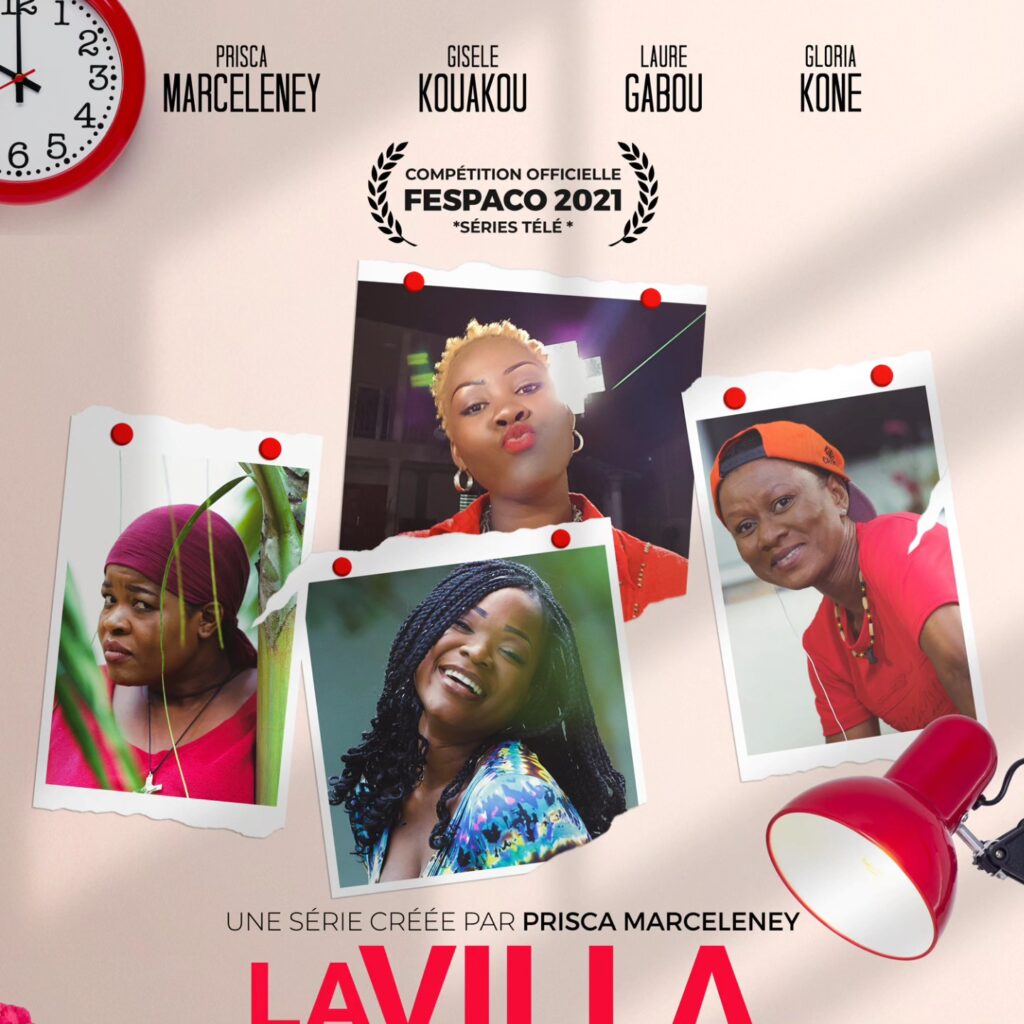
That’s how my first series, La Villa d’à côté, was born in 2011.
What was the concept of the series?
It’s a sitcom featuring four young women with different personalities sharing an apartment. The main message was to show how people with different temperaments, social backgrounds, upbringings, and principles can still live together.
For us, it was an example of social cohesion, coexistence, and unity. All of this was presented through humorous situations-light on the surface, but with a real message underneath.
The first season had 13 episodes of 20 to 25 minutes each. We produced the series with our own funds, along with some subsidies from the SIC fund of the Ministry of Culture and considerable support from the Moroccan Cinematographic Center, which helped us with post-production. The budget was around 25 to 30 million CFA francs. Financially, it’s heavy: you have to pay technicians, actors, production management, transport, catering, and more.
The series was sold to TV5 Monde, RTI, and distributed by Côte Ouest. Season 1 performed well, which confirmed that I had been right to take the leap. Season 2 came out in 2017–2018.
There was a long gap between season 1 and season 2. Why?
Season 1 came out in 2011. Season 2 was filmed in 2017, about six years later. Of course, funding is always a central issue in our film industries in Africa. But there were also personal reasons. In the meantime, I got married and had a child. I had to redefine my priorities, so I chose to focus on my family.
I stepped away a bit from film sets and the audiovisual world to take care of my child, but also to work on new projects that you will see very soon.
The break is over, I’m back.
You married director Jacques Trabi. Was he your director at the time?
No, actually. I didn’t meet Jacques Trabi on a film set. I met him in Paris. I was there to visit collaborators at TV5 Monde. They had bought the first season of La Villa d’à côté, and I had come to offer them the second season for pre-purchase. That’s how our paths crossed in a professional context.
You later created your production company, Babi Pictures…
Yes, I created my production company, Babi Pictures. Through it, we first produced L’Amour en bonus, a romantic comedy directed by Jacques Trabi, my husband.
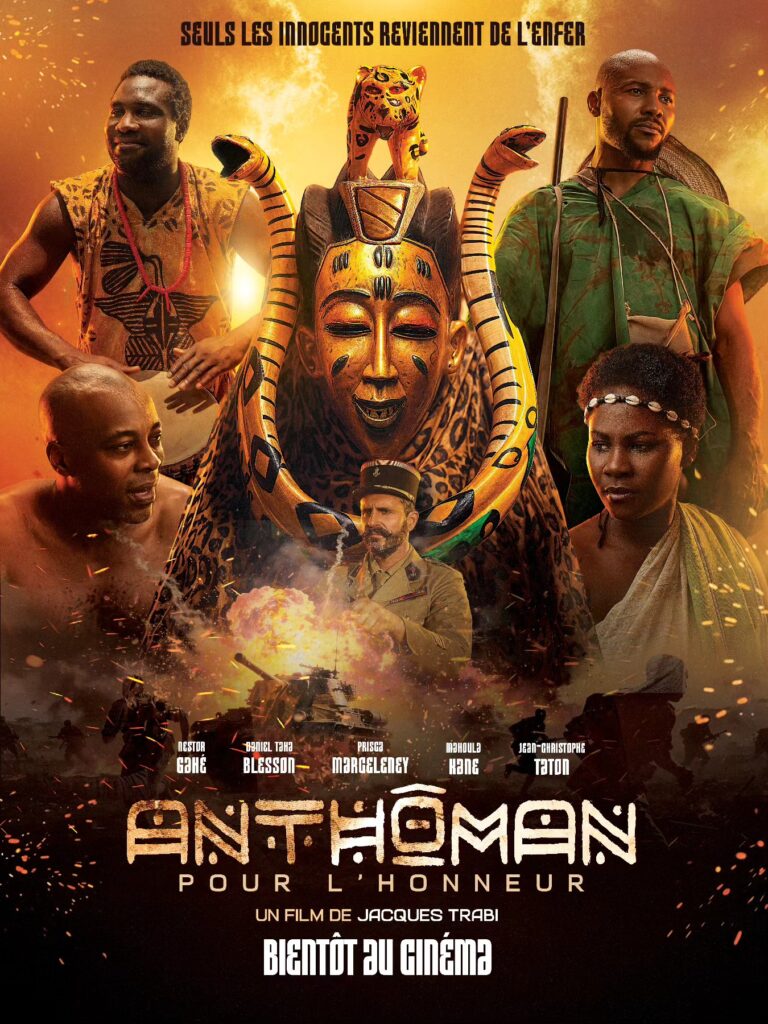
Then we produced his first feature film, Sans Regret, in 2016. He had previously directed short films, but Sans Regret was his first feature. After that, we filmed season 2 of La Villa d’à côté in 2017–2018. Later, we co-produced Dr Wlika with Plan A and Canal+ in 2023-2024. In the meantime, we also produced Anthôman, Jacques Trabi’s second feature film. It was shot in 2023 between Côte d’Ivoire and France and will be released soon.
Let’s talk about your series Dr Wlika. How did the idea come about?
I’m a big consumer of TV series. I often say I’m a “series addict.” And I have a particular fondness for medical dramas. Dr Wlika was born from my love for medical series like Grey’s Anatomy, The Resident, and New Amsterdam.
In Africa, there have been attempts. In Côte d’Ivoire, for example, there was Docteur Boris. In Senegal, I believe there was another medical series. But I felt something was missing, the dramatic intensity and narrative tension that you find in Western medical dramas.
I wanted to create an African medical series with intensity, dramatic tension, and psychological depth, while telling our own realities.
What is Dr Wlika’s character like?
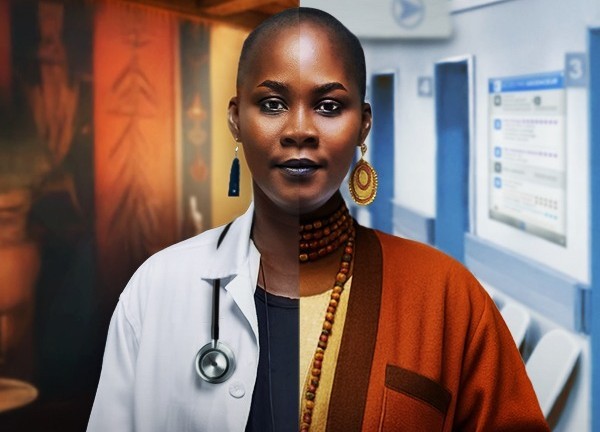
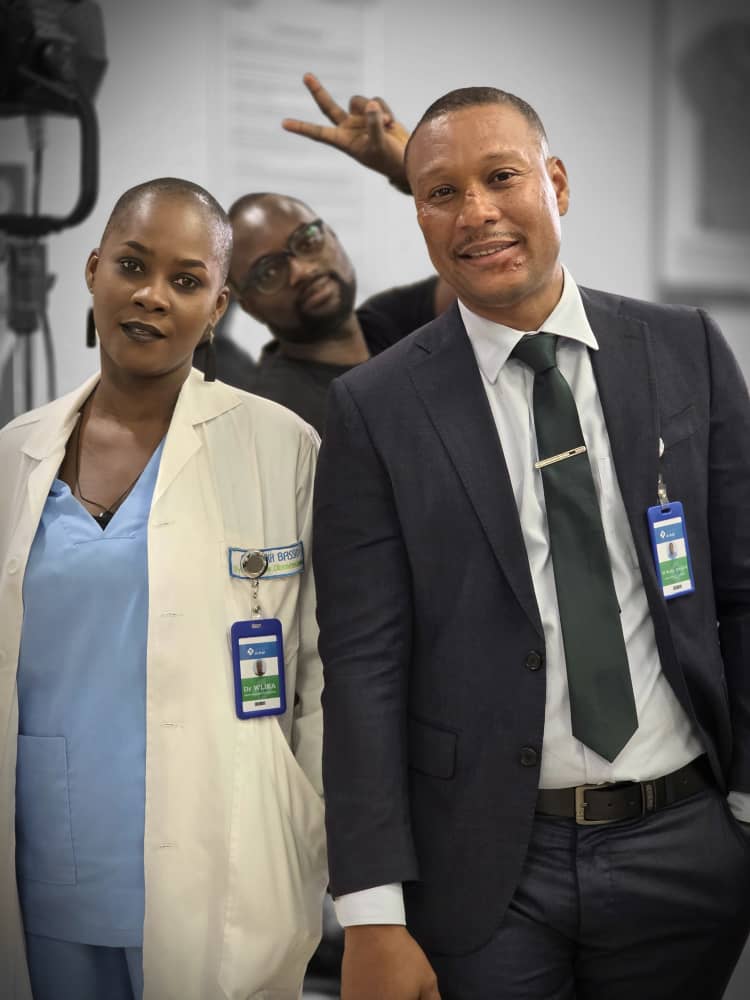
Dr Wlika is a female gynecologist who is also a traditional healer. She represents a bridge between modern medicine and traditional medicine. She tries to reconcile these two worlds, which are represented by characters who hold very radical positions. On one side, modern medicine, represented by Doctor Bahi. On the other, tradition, embodied by the character Bolou. Both visions are rigid and extreme. Dr Wlika rejects the idea that everything must be black or white. She defends the idea of balance. She wants to show that modern and traditional medicine can coexist and even collaborate for the benefit of patients.
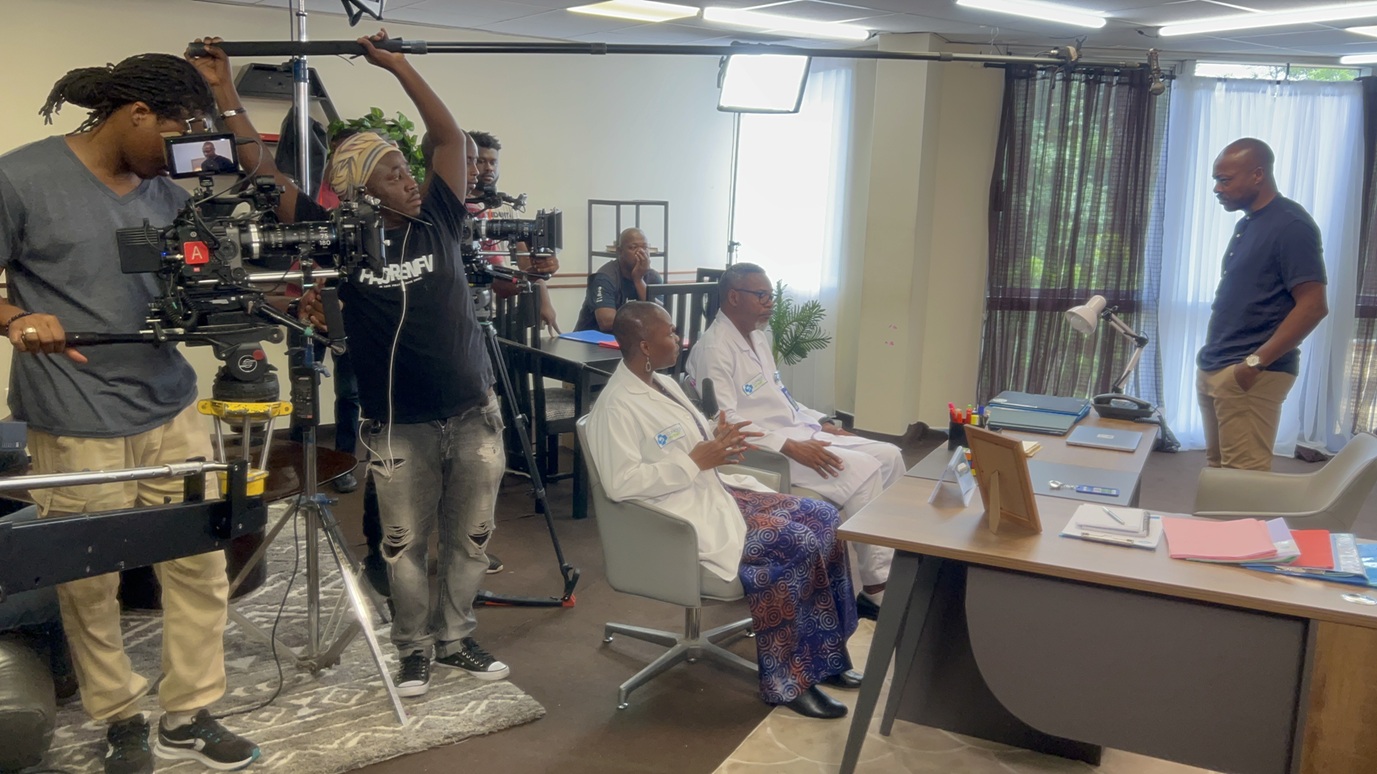
Beyond this central theme, the series also addresses Ivorian social issues, realities that speak directly to the audience.
The first season has 10 episodes of 52 minutes. It was broadcast on Canal+ Afrique. In addition to Canal+, the series was also aired on Orange TV, particularly through African channel packages, which allowed us to reach an even wider audience.
Filming lasted six months, including three months at the PISAM clinic in Abidjan, which opened its doors to us. A big thank you to the management and all the staff there.
On Dr Wlika, you wear several hats…
Yes, I like to do a bit of everything (laughs). If I stay in the same role for too long, I get tired. On Dr Wlika, I am the creator, co-screenwriter, producer, and an actress.
Of course, I managed to take on this challenge because I surrounded myself with competent people, sometimes even more competent than me in certain areas. That’s essential when you take on a project like this and want to handle several roles.
Who are your inspirations as an actress and screenwriter?
There are so many. Artists inspire us because they make us want to create. When you see them perform, create, and tell stories, everything seems simple. And that feeling makes you want to try and dare.
Great figures, giants like Sidiki Bakaba, can only inspire us. I knew very early that I wanted to work in cinema. Already in middle school and high school, while my friends talked about criminology, sociology, or law, for me it was clear: it would be theatre, it would be cinema.
I remember watching Sida dans la Cité in Côte d’Ivoire long before I appeared in it. There was the character Maï la Bombe acting alongside the late actor Lanse Touré. They moved me deeply. I remember crying while watching that series. They were so real that they completely drew me into their world.
I also think of Akissi Delta, whom I affectionately call “Mama.” She is a strong and inspiring woman. She had the courage to go into production at a time when it wasn’t easy. Producing is never simple, especially in our contexts. But she did it-and succeeded.
With the series Ma Famille, she marked an entire generation and helped shine a spotlight on Côte d’Ivoire far beyond its borders. I take my hat off to her. She is one of the great figures of Ivorian and African cinema.
And internationally?
I can’t fail to mention one of my favorite films: The Bridges of Madison County, with Clint Eastwood alongside Meryl Streep.
In terms of storytelling, directing, and acting, this film is magnificent. The love story is incredibly beautiful. And Meryl Streep-for me, she is an exceptional actress. She can play anything. She transforms herself completely. It may look easy, but behind that apparent simplicity lies immense work. Performances like that strengthened my desire to pursue cinema.
Later, there was Viola Davis. Her performance in How to Get Away with Murder is simply outstanding. I watch and rewatch the series without ever getting tired of it.
These are figures who inspire you and push you to surpass yourself.
What themes do you prefer to explore in cinema? Where does your inspiration come from when creating a series?
If I said “everything,” that would be both vague and untrue. When I look at what I’ve done, what I’m planning, and what I’m currently developing, I realize there is a common thread: women, the human experience, inner struggles, and resilience. I draw inspiration from myself, from my own experiences, from the experiences of people around me, from what I’ve seen, heard, and lived through. Experience is our greatest wealth.
Whether in La Villa d’à côté, Dr Wlika, or in my projects in development, there is always this desire to tell strong, complex, nuanced female stories. Imperfect women,but women who stand tall. Because our stories deserve to be told by us.
You mentioned experience. Is that what pushed you to write a novel?
Absolutely. For a long time, I told myself I couldn’t write a novel. When I finished reading a book, I would think, “Wow… I could never do that.” I had already written screenplays, yes. But a novel? For me, that seemed impossible.
Then COVID happened. The period when everything stopped. I thought: why not go back to university? I had started studying modern literature in Côte d’Ivoire but never finished.
So I enrolled at the University of Versailles Saint-Quentin-en-Yvelines. I attended classes during the day with younger students. One day, our writing professor gave us an assignment: write a text and read it aloud to the class. When I read mine, she was very enthusiastic. She told me, “Prisca, this is very good. You should write.” She even sent me an email afterward saying honestly: “You have something. Go for it.” That’s when I realized that we sometimes set limits for ourselves that don’t actually exist. You have to try. You have to confront yourself.
So you wrote a novel. What is it about?
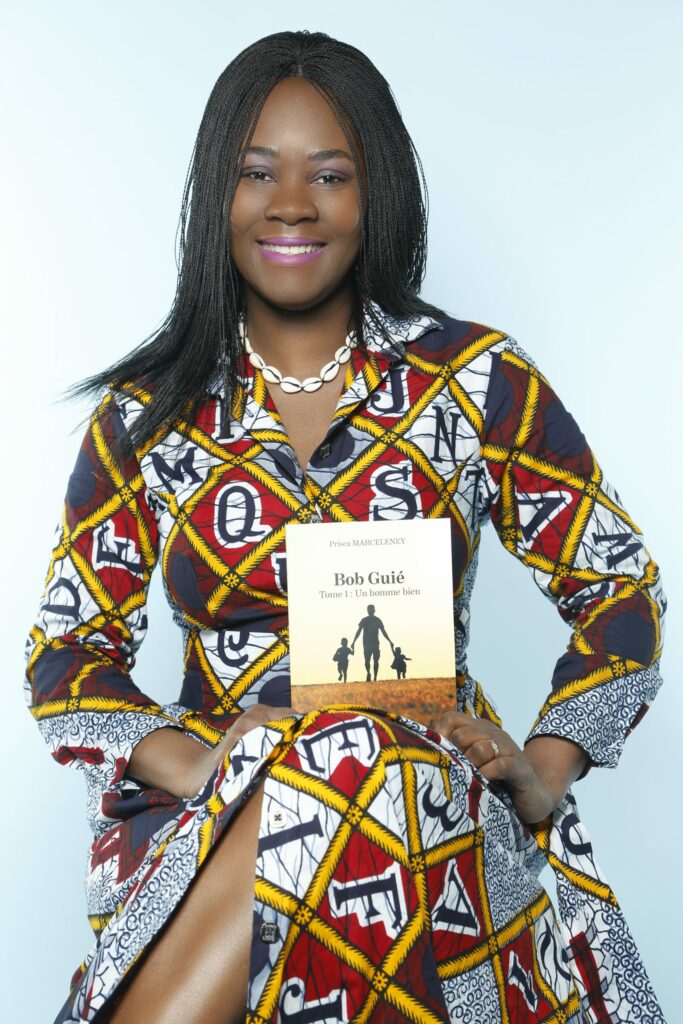
My novel is titled “A Good Man”. It tells the story of a man who must take on both the roles of father and mother because his wife has left. He finds himself alone with his two children: a little boy and a girl. Usually we see many stories about single mothers. Here, I wanted to reverse the perspective. It shows a single father trying to balance his professional life, family life, ambitions, and future plans. Even though the main character is a man, I focus especially on the journey of his daughter. Once again, the female figure is never far away in my stories.
Do you consider yourself a feminist artist?
The word “feminist” is not one I spontaneously use. I prefer to talk about self-assertion. For me, the most important thing is to respect yourself, love yourself, and respect others. Equality is important, of course, but I don’t define myself as an activist in the strict sense.
I have never personally felt reduced or belittled in my professional environment because I am a woman. However, I am aware that there is a social perception of women, and that sometimes influences things. In some situations, where a man might have to work twice as hard, a woman may have to work four times harder to be recognized in the same way. That is a societal reality tied to education and cultural habits. But I prefer to see it differently: perhaps women simply have that capacity to do even more.
I am in favor of equality, yes, but above all of everyone’s freedom to assert themselves and express themselves fully.
Are there many women producers or screenwriters in Côte d’Ivoire?
There are some, but still relatively few. There are female screenwriters, producers, and directors. They are present, even if they are not yet numerous. The landscape is gradually evolving.
Is directing the next step for you?
I’m considering it. Nothing is really holding me back. I’m preparing myself. I like to build momentum before launching into something. I believe strongly in preparation. When the time comes, it will feel natural.
In the meantime, Prisca Marceleney will soon return with Dr Wlika Season 2 and many other exciting projects for audiences to enjoy.
Thank you!